Act I: The Forge
i.
Before I was born, Dad directed a film about a biker gang who did nothing but drift along American roads, smoke, drink, and fuck. Grandfather despised the film, thought it worse than Dad’s usual “spectacular money-eating shit” fare, and had done his level best to stop it from being released. Arguments about the movie quickly spiraled into personal insults. Dad shouted that Grandfather was part of the old guard holding back Hollywood who oughta be ushered into nursing homes and Grandfather yelled back that Dad was a light-headed alcoholic who wasn’t good enough to lay eyes on his precious daughter, let alone marry her.
It was early enough in their marriage that Mom still cared for Dad, and had tried to intervene during one of these fights. Her attempt at defending Dad resulted in him slapping her. In front of Grandfather. She ended up with a black eye and a bruised cheek. Dad landed in the hospital for a broken wrist and two black eyes. After that, he never touched Mom again. He apologized on his knees, brought her flowers and diamonds, and she forgave him.
Grandfather neither forgave nor forgot. Actors mysteriously quit, release dates shifted, promotion was nonexistent. His persistent efforts in sabotaging the film resulted in it absolutely tanking. Dad’s biker flick was a Failure, but for years he had claimed that without Grandfather’s influence, it would have been a Success.
In my family, there is only Success or Failure. You’re either a Winner or a Loser. You can only have Triumphs or Defeats.
Being a Wolfstein means you have to fight for the laurels. We’re not allowed to stand around and look pretty, like all these other spoiled American families. If you want recognition, you have to bleed for it.
So you’re in the arena, sword in hand.
You’re eight paces from your opponent, and shooting at nine.
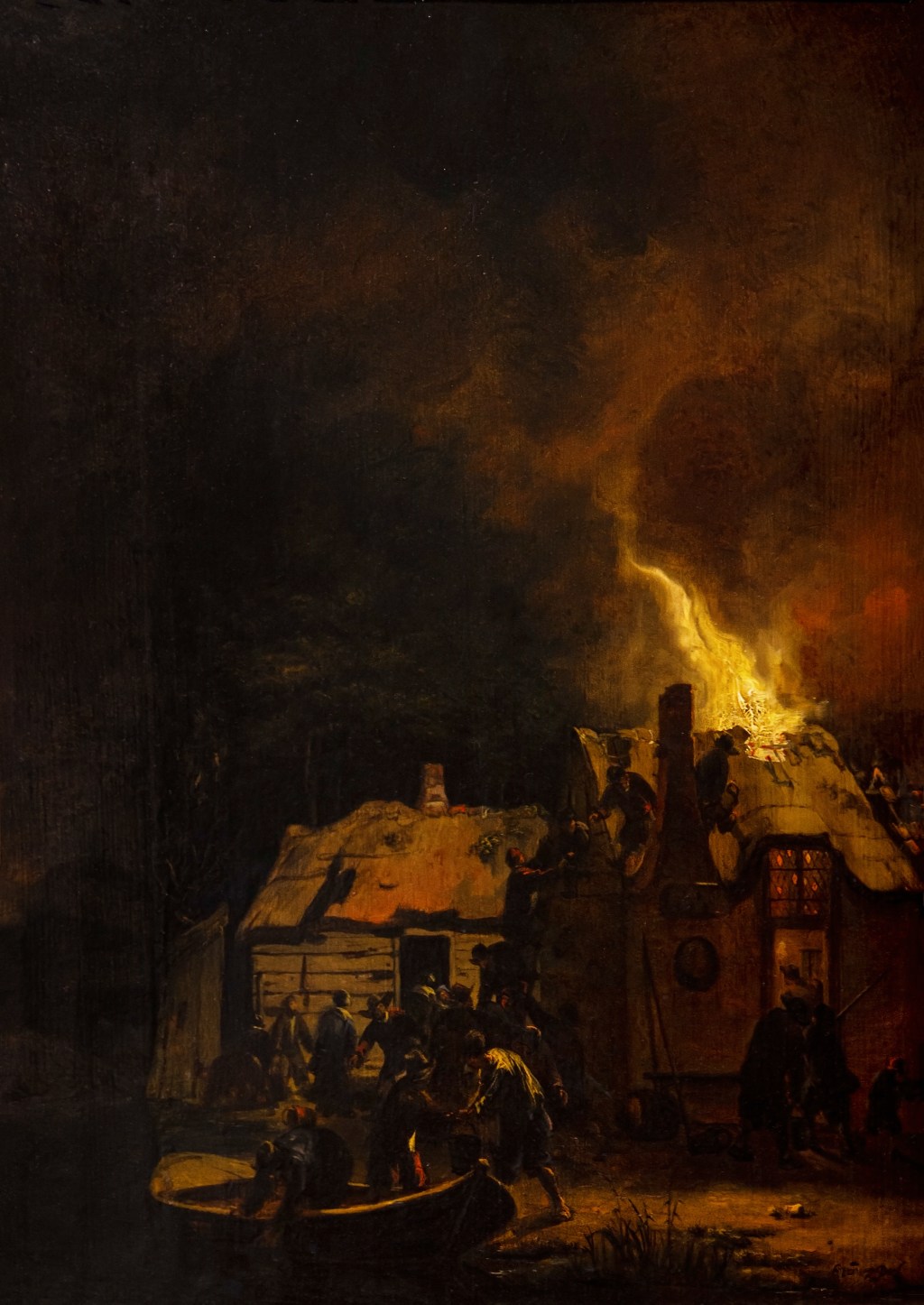
You’re the one with the match stick, watching your enemy’s house burn down. Maybe your enemy is in the house when you light the fire. Maybe not. Better if they are, though.
ii.
The clock is ticking and tocking, its hands creeping closer to midnight, and I still haven’t come. I’m in bed, envisioning every hot scenario, all the red lipstick and boobs and sultry voices, and nothing is working. Maybe I’m too tired from all the late nights and early mornings or too stressed out about my grades or maybe it’s genetics. Maybe Dad’s Ingber genes has fucked me over once again. Whatever the issue is, I wish it would go away so that I could have a night of peaceful sleep.
Dick in hand, dirty magazine propped up on my chest, tissues on the side. I’m stroking and stroking and I can’t feel anything. I might as well be touching white cast marble, like my dick’s been replaced with one from a Greco-Roman statue.
I turn the page and try to make up another little fantasy to play in my head. I’ll hear a series of click-clacks down the hallway, growing louder and louder as she approaches my room. Click-clack, click-clack, click–clack. Then, a brisk knock on the door. And she won’t wait for my response, she’ll just open the door and stride in, clad in nothing but her high heels. I haven’t decided on whether she looks like Julia Roberts or Cindy Crawford, but it doesn’t matter. She’ll be here, in my room, on my bed, on top of me, and—
Oh, fuck. Finally. I pant harsh, short gasps, and my hand works faster and faster. A flame ignites inside me. It’s weak, but goddamn it, it’s something. There’s something alive in me and if I keep it up, maybe it won’t die so quick this time. Fuck, fuck, fuck, oh God baby, oh yeah, I chant in my head. Don’t stop. Fuck, don’t stop.
The scene is so vivid I can almost hear someone walking to the room, the door creaking open, and a little voice saying, “Jakey?” A moment of pure, excruciating silence. “Jakey, I had a bad dream again.”
I open my eyes and squint at the door to find a little girl clad in a Little Mermaid dress, a halo of golden curls around her head, outlined by the amber hallway light. Shit, it’s Miri. My hand falls to the side, and I stifle a groan.
Under the covers, I discreetly slip my boxers back on. Miri shuffles forward. She stares at me with her big, brown eyes—doe eyes she inherited from Dad. “They’re always staring at you like they’re begging you to hit them with your car,” Grandfather once said about them.
“Go to your room, Mir,” I say, my voice rough. “I’ll be there in a minute.”
“Okay.” She sniffles, a warning that I’ve got about two minutes before the waterworks start, and leaves.
I go to the bathroom, and wash my hands twice. Rinse my face for good measure. The corner of my lip stings from a half-healed cut. My face still wet, I open my eyes and find a guy who looked like he got worked over by Brian McCarthy at Neil’s boxing gym last Friday. The left side of my face is covered in mottled yellow-purple bruises. I have a nasty black eye on the right. But hey, at least my nose isn’t broken. Yet.
Brian’s good—he got in more hits than anyone else ever has. But I was better.
Magazine hidden and erection more than gone, I head for Miri’s room. The color pink assaults my eyes as I open the door. Pink walls, bedsheets, toys, and even the freaking glow-in-the-dark stars. In the middle of Pinklandia is a lump buried underneath the sheets. The only motion it makes is when it breathes. “What is this?” I say, prodding the lump’s ribs, right where the ticklish spots are.
A squeal as Miri tries to escape the tickling. “Stop, Jakey, it tickles!”
“It speaks! I wonder what else it can do.” I go back in for another tickle attack, and this one pushes her right into my trap. She crawls out from under the blanket, desperate to escape, and lands right in my arms.
I scoop her up. “Ha, I caught it!” I exclaim.
Miri wraps her arms around me and buries her wet face into the crook of my neck. “Only cuz I let you,” she mumbles.
I lift a hand to pat her hair. “What was it this time?” I ask, though her answer never changes.
“The volcano,” she says. “Pom…Pompee—”
“Pompeii?”
She nods. For the millionth time, I mentally curse out whatever idiot nanny thought it was a good idea to let Miri watch the TV documentary on the Pompeii eruption.
“Why don’t you tell me about it? It’ll make you feel better if you let it all out.”
“Me, you, Mommy, and Daddy were standing outside. And then I heard a big boom! That’s when the volcano erupted and lava flew everywhere. It was the really fast kind, too. I looked for Daddy and Mommy and you, but you were gone. So I tried to run away to find you, but my legs were stuck and the lava was all around me.”
iii.
Miri is five years, four months, and seventeen days old at the time of her death. That’s 47,160 hours of life, or 2,829,600 in minutes.
It takes her approximately nine minutes to pass out from smoke inhalation. It takes two more minutes for her to die.
iv.
Dad calls for me as I’m walking back to my room. “Jacob?” he says, voice slurring, tongue tripping.
He must have just returned from his weekly Friday bar excursion. I roll my eyes and approach his office. The sour odor of beer attacks my nose and one peek through the door confirms that yup, he’s drunk. Dad’s sprawled across the couch on his stomach, a position he’s going to regret in the morning. His wireframe glasses are perched precariously on the arm of the couch. He turns his head towards the door, his eyes still closed, and repeats, “Jacob? Is that you, son?”
If I answer, I’ll have to help clean him up and guide him to bed, which will be the fourth time this month. My limit is three Fridays. I remain silent.
His breathing slows and his face relaxes. He falls asleep. In sleep, they say, people look younger or more innocent. Dad’s appearance doesn’t change. He looks as middle-aged and cynical as he does when he’s awake. The only difference is that his eyes are closed.
This will be the last time I see Dad. If I knew this, would I have answered? Would I have entered his office, crouched by his side, and said, “Yeah, Dad, it’s me. What do you need?”
But it is the fourth Friday of the month, and my limit is three. I could not allow myself to help him, however much I wished I did.
v.
Mom’s been seeing someone behind Dad’s back for six months and I still haven’t told Dad about the affair.
I’m probably a bad son.
Correction: I am a bad son.
But if I tell him, it’s not as if the situation will improve. Dad learning about the affair will lead to an implosion. Instability in the form of a messy divorce and messier custody fights. Chaos is the last thing Miri needs. I read this in a child-rearing book I borrowed from the library. Young children need stability. They need a singular place of living, two parents, and lots of love. This is important in building their identity and self-confidence. An absence of any of these elements can impact their well-being in the future. I can provide love and ensure that we live in one house. Unfortunately, I can’t force my parents to parent, for all my efforts these past years.
Besides, New Guy makes Mom happy. His name is Sonny Ruvolo, and he’s a novelist. “Mostly short stories,” he said in a thick New Jersey accent, “but I was taken by the desire to write a novel. And”—violent hand gesture—“out it sprang, like Athena from Zeus’s skull.”
Mom is producing an adaptation of Ruvolo’s novel. It’s going to star Al Pacino as a detective who finds out his daughter isn’t his biological kid. Fun shit.
Ruvolo has been over to our house for dinner a couple times. He makes killer spaghetti. I spotted him and Mom doing the spaghetti kiss-thing from Lady and The Tramp in the kitchen and almost threw up. I wanted to sock him in the jaw—show him who the man around here was when Dad wasn’t home, but Mom was smiling. A real smile that carved lines into her cheeks. And in that moment, the woman I was spying on wasn’t Mom but an entirely different person, a person she could only be without us.
vi.
Everything made in the forge cannot be unmade. This is the opening line to Ruvulo’s new novel.
I can’t believe this shit is an actual New York Times bestseller. Who let Ruvolo anywhere near Penguin Books, let alone a typewriter?
vii.
Is there anything more mortifying than finding your Dad’s Viagra in the medicine cabinet when you were trying to find a razor?
I close the cabinet door and give up on shaving. Hopefully, Tess digs stubble.
I’m not surprised, though. Dad’s been drinking since he was fifteen. He’s “quit” a dozen times, gone to multiple rehabs, and cycled through the 12-step program so many times that I can recite the exact apology he always offers on step ten. Of course he can’t get it up.
viii.
I hold my hand over the open stove for as long as I can stand it, and then longer. My hand is covered in red, weeping blisters for the next two and a half weeks. I burst open most of them by day two.
Some would call this self-mutilation. Dad would call this equality. Mom would call my psychiatrist. I call this duty.
ix.
One night, I have a dream, too.
I’m standing in the front yard, watching the house crumble into ash. But I can’t move. My feet are sinking into the ground like quicksand, and my arms are wrenched behind me. I’m howling for Miri, Dad, Mom, anyone.
“Please let me go,” I beg, and they tell me, their voices muffled like they’re underwater, No, son, we can’t do that. It’s for your own safety.
Two firefighters emerge from the house. Between them is a stretcher covered by a white sheet. They try to drag me away before I can see more, but I pull away, ignoring the pop-hiss of my shoulder ripping out of its socket.
Beneath the sheet is an outline of a figure so small and so recognizable—how many times have I seen that exact shape underneath a blanket—but it’s okay, it’s alright. Soon she’ll start squirming around because she’s a hyperactive five year old. “Surprise,” she’ll exclaim. “Did I scare you, Jakey?”
“You sure did, kid, you scared the fucking heart out of me. Never do that again, I swear, or you’ll be in big trouble. Aw, don’t cry, I didn’t mean it. You know I could never get mad at you, Mir. Just tell me you’re not hurt. Tell me you’re fine. Shake your hand or wiggle a foot or something. Why don’t you get out from that sheet so I can see you? What’s the matter, why aren’t you moving?”
Why isn’t she moving?
I can’t breathe. I can’t breathe. My lungs feel like they’re being crushed by compactors.
It is only when I wake up that I realize that that was not a dream.
x.
“Beverly Hills Mansion Burns Down,” the Los Angeles Times proclaims on the front cover, complete with a vivid photograph of the fire in question. In the full picture, I’m in the bottom left corner, kneeling on the front lawn, but they cropped me out.
“Arson or Accident?” the headline continues. That’s the Question of the Year, and for a period of time, in L.A. at least, it’s an issue that’s more pressing than other national concerns like “Where’s Osama bin Laden?” or “Did you watch The Two Towers yet?” The full report is going to be released by the fire investigators in a few weeks, and the media is practically having a countdown to the day.
As of today, the fire investigators are still examining the scene to determine the cause. While they have declined to comment, there is significant evidence that the fire was an—
Mom rips the newspaper out of my hands and tosses it into the trash.
“Hey!” I protest. “I was reading that.”
“Until the report comes out and exonerates your father,” she says, “I won’t have you read these lies—”
“Exonerate him?” I repeat, raising my eyebrows. “What for? He’s guilty, Mom.”
“Your father—”
“—drank that night, like he did the night before, and the night before that.”
Mom crosses her arms. “That doesn’t mean that he set the fire.”
“Don’t play stupid. How the fire started changes nothing. He would still have been too drunk off his ass to do anything but sit in a burning house and let Miri die. Do you get it? Your alcoholic, bastard of a husband that you picked to be a father let Miri—”
Mom slaps me across the face, stunning me into silence. It doesn’t hurt—all the nerves in my face are dead from boxing—except Mom’s never hit me before. I raise a hand to my left cheek, and find blood. Her wedding ring must’ve cut me.
She drops her hand and swallows. “He’s not the only one to blame,” she says quietly. “Everyone had a part to play.” And I smile because for once, she’s said something that we can both agree on. We all are guilty, the living more than the dead.
Act II: The Stake
i.
They keep asking me what I remember. And it doesn’t matter who it is asking—the medical staff, police, reporters, Mom—my answer is the same: nothing.
The whole night, up until I wake up in the hospital bed, is blank. The doctors call it “dissociative amnesia” and say it’ll take time before I regain my memory. How long exactly? They don’t know. Could be days, weeks, months. Depends on how fast he recovers. Could be forever.
ii.
During a fire, the oxygen concentration drops to 10-15 percent, at which point death from asphyxiation occurs.
iii.
I open my eyes and taste ash in my mouth. My throat is dry.
“Where’s Miri?” is my first thought. It’s a question I learned to ask the day Miri learned how to walk and I never stopped asking it since.
I’ll never stop asking.
Where’s Miri? Where’s my baby sister?
iv.
I stop eating. It’s not like one of those disorders college girls get, but everything I put in my mouth tastes like ash. I start getting real skinny to the point that I can count my ribs in the mirror. It’s cool. Real Edward Norton from Fight Club like. Hey, maybe I can convince Neil to do something with that half-finished basement of his.
v.
“When can I go home?”
Mom is sitting on the hospital chair next to me. Her eyes are bloodshot and dull. There’s nothing behind them. Creepy as shit. A silence balloons up between us, with only the steady beeps of the monitor threatening to puncture it.
“Mom?” I say.
“I don’t know, sweetheart,” she finally answers. She reaches out a hand to stroke my hair. I flinch at the cold touch and she pulls her hand back as if I’ve stung her. “When you get better,” she says and smiles weakly. “The doctors will tell us later.”
Since when did she do motherly affection? And what happened to her nail polish? Her fingernails are bare and it disturbs me. I move to sit up in the hospital bed, tired of being loomed over.
She tries to stop me, but I bat her hands away. She hasn’t treated me like this since I was seven and caught chicken pox. Like I was something fragile or something to care about. I sit up despite the shoulder pain, and look at her. Her blonde hair, usually straightened and sleek, is a frizzy mess. She isn’t wearing any lipstick either.
I frown. “Shouldn’t you be in London with… him? Why are you back so early?”
Mom’s expression crumbles for a second, and it’s like someone pulled the curtains before the stage is ready and you wish they hadn’t because everything backstage is a wreck. What the fuck’s wrong with her? She’s afraid. I can see it in the lines around her mouth and in the way her eyes widen. I just don’t know what it is that she’s afraid of. She’s hiding it from me. Before I can demand an answer, the curtains have dropped back down. She says, “You were sick, honey. I had to come back.”
She reaches out again to smooth my hair back from my clammy forehead and this time, I let her. Her hand is trembling. She pets me like she’s trying to soothe herself.
vi.
The hallways of the hospital are long, narrow passages, sterilized and empty. And it is freezing. These damn hospital gowns are so thin. I shiver, rubbing my hands against my bare forearms as I stagger down the path. The exit is every other blue push bar door, but I ignore them all. There is another destination I am searching for. Finally, ahead. A glaring, red sign: BURN UNIT.
The putrid, sweet stench of impending death threatens to overcome me, but I can’t turn away. Inside lay rows and rows of bandaged corpses-to-be in various states of decay, but I recognize Dad immediately.
He is wrapped in bandages from head to toe, with only his face visible. It’s like viewing a Pharaoh before their entombment. He’s attached to a monitor, but it’s turned off for some reason. The dark, blank screen shows only my gaunt reflection in the glass.
I step towards him. My legs shake as if I were a newborn walking for the first time. “Dad?” I whisper. “Is that—is that you?”
He opens his eyes—doe eyes, brown eyes, eyes that beg you to hit them with your car—and lifts a bandaged arm. Stretches out his bloody hand. He’s beckoning to me. I try to obey, but I can’t, my legs won’t move, I’m sorry Dad.
His lips part and where his tongue should be is a dark stub of flesh, as black as coal. His not-tonge flops against the floor of his mouth, and it should be impossible for him to speak. When he does, it is both declaration and condemnation. It is the voice of God, and he has spoken, and he says:
“Jacob.”
He said my name. Oh God, he’s alive.
I run to him. Except it’s too late. He’s fallen asleep and he won’t wake again. I grab him by the shoulders, and shake and shake and shake—
A flash flood of nurses crash into the room, a sea of blue scrubs. “Hey! Hey!” I shout at them. “My dad’s awake! He opened his eyes, he moved his arm. Just look for yourselves!”
They ignore me, pretending as if Dad isn’t there at all. They keep trying to drag me away, but I will not go, I will not leave him. The sea parts, clearing a path for the exit. If I leave, I can never return. I drag my feet against the slippery tiles, but my strength fails me as it has failed everyone else in my life.
He said my name. He was awake. He’s still alive.
The nurses don’t believe me. It’s the shock. The grief. Your over-active imagination working your trauma. You poor thing, why don’t you get in your bed and rest some, honey, alright, everything will be okay, your mom is coming back soon, don’t you worry. You just close your eyes and dream, dream something sweeter than this, than the smell of burned flesh and the sight of charred skin and the sound of the death rattle your father made that you mistook for your name. But he said my name, I know he did, don’t fucking sedate me you bitch, don’t you dare fucking do it, I know what I heard, I’m not crazy, I don’t want to go to sleep, please don’t make me. Please don’t make me.
But I sleep. I dream.
vii.
On the second day, I remember.
I should be dead, but I’m not. Here I am, a should-be corpse lying in a hospital bed, surrounded by flowers and “Get well” cards and smiling teddy bears, like I’m fucking three.
Laughter bursts out of me. I can’t stop. This is fucking hysterical. It claws its way out of me. Tears form in my eyes. I shouldn’t be doing this; I should be crying or screaming or rocking back and forth.
Mom runs into my room, holding a stack of my old comics. “Jake, is everything alright—” I double over, my laughing fit intensifying. “What’s so funny?”
I wipe a tear with the back of my hand. The IV pinches my skin at the motion. My cheeks ache from the unnatural contortion. Mom stares at me, bewildered. There’s a familiar crease between her eyebrows as she frowns, contemplating when to call the nurses and tell them that I’ve officially lost it.
Maybe I have. Maybe I am crazy.
The nurses come, armed with their honey-sweet words and drugs, and I remember that cursing is also a useful reaction to life’s bullshit.
viii.
Mom wants me to speak at Dad’s funeral, but I’m not sure she’ll like my speech. I tell her so. She tells me to write one anyways.
“Why can’t you do it? You’re his wife.”
“You’re his son,” she replies evenly.
A sneer, ugly and vindictive, spreads over my face like an oil spill across water. “And whose fault is that?” I say.
She doesn’t have an answer for me. She never does.
ix.
Death has a funny effect on a person’s reputation.
Take Dad. People couldn’t make up their minds on whether they hated or loved his works. As the years passed, public opinion fell on the side of the former.
Now, critics thought his films were artistic masterpieces. Actors, even those who had only stumbled upon his sets by accident, praised his genius. “Shem Ingber was a visionary who never let anyone stop him from achieving his dreams,” said Will Hartley, rom-com idol and jackass who mistook Dad for a server once during the 1997 Academy Awards ceremony. “I would’ve given anything to work with him,” Hartley added, knowing very well that he rejected three separate offers to star in Dad’s movies.
This effect is known as “posthumous fame”. I call it “jumping on the funeral carriage”.
x.
Sonny Ruvolo appears at the funeral.
He leaves twenty minutes later with a broken nose and crimson shirt.
xi.
Hi. Um. My—my dad was—well, he wasn’t my hero. I never idolized him like that, even as a kid. But I admired certain parts of him. Uh. He always told the greatest bedtime stories. Looking back, I’m not sure if they were meant for kids. A few gave me nightmares, but he—he was fantastic at the voices. And I had fun. That’s the thing about him, I guess, that I want people to remember most. He just wanted to entertain other people, and show them the world the way he saw it. Sometimes, that view wasn’t nice—it could be macabre and depressing. There was a certain beauty to it, though. People didn’t always appreciate his works, but Dad kept trying, anyway.
Act III: The Hearth
i.
For Mom’s fourteenth birthday, instead of a pony or necklace or kiss from Robert Redford, she received two officers on the doorstep, who crisply informed her that her beloved older brother had died in combat. Somewhere out there in the ever-deepening jungles of Vietnam laid the fragmented chunks of Jacob Aaron Wolfstein, dead at the tender age of nineteen.
Grandfather and Grandmother had two younger boys, Henry and Samuel. Grandfather loved Jacob the most out of his sons. He adored Mom by virtue of her being his only daughter. He didn’t give a shit about the other two.
Uncle Henry turned out okay. He lives in New York with his “housemate” and works as the family lawyer. Dad likes to call Uncle Henry “queer consigliere” behind his back.
We haven’t heard from Uncle Sam in decades, not since he turned up high and begging for money at my parents’ wedding.
I ask Mom what her opinion was of Uncle Sam, and she gives me a strained smile. “He’s my brother. Of course I love him. I hope he’s doing well, wherever he is,” she answers.
I ask her again some hours later. She’s five drinks in and willingly retrieves her childhood family photo album. I ask her where the pictures of Uncle Sam are, and tell her I’m curious what he looks like now. Why haven’t we met him? When questioning, I am cautious. The excavation of the truth is a delicate operation and the mine might collapse at any point.
“He didn’t have it in him,” she finally says, her eyes affixed on a photograph of her family at the beach. Her and Uncle Jacob are hugging either side of Grandfather. The rest of the family is standing a slight distance away. “He wasn’t like us. Sam didn’t want what we wanted. And that really disappointed your grandfather.”
Late at night, while everyone is asleep, I creep back into the living room and crack open the album. Jacob A. Wolfstein is my carbon copy. Or am I his? Anyhow, we share so many of the same features: deep-set blue eyes, large nose, thin lips. Curly brown hair. And we even have the same scrunch between our eyebrows when frowning. I wonder if he has the deep baritone voice that I have, or my barking laugh. Would he be my favorite uncle? I’ll never know because he took the wrong step onto a landmine.
ii.
Brothers are weird like that. They’re your heroes one day, bullies the next. They’re funny, annoying, kind, and childish in the span of ten minutes. They’ll promise to be by your side forever, and then die in a war or elope with a boyfriend to New York or become a heroin addict. They’ll swear that they’ll protect you no matter what, and then be at a party, making out with a girl. They’ll climb up onto the roof of her house as your roof caves in. They’ll lose themselves in the pleasures of a warm, tight heat, the very heat that’ll burn you up like tinder. But they’ll be too distracted by the processes of fumbling with a bra strap, and finding the right spots to kiss, and murmuring false words of adoration to have even noticed that you are gone.
iii.
Singing in the Rain is Miri’s favorite film, God knows why. She’s way too young to understand most of it. All she gets are “pretty pictures and pretty songs”. But she loves that film to death. She’d watch it every night if she could, and I don’t have the heart to tell her no. So I’m nodding my head to Lina Lamont’s shrill Brooklyn accent or Cosmo’s comedy routine. Sometimes, it’s Gene Kelly’s voice lulling the both of us to sleep.
I once read that Gene Kelly performed the title song with a 103 degree fever. Makes no sense to work while you’re that sick—he should’ve been in the hospital, not on a movie set—but you have to admire his fortitude. The guy kept on dancing and singing and twirling his umbrella around flawlessly all while he must have been feeling like he was burning up from the inside out.
iv.
The key is understanding that nothing’s real onscreen. Not the kisses or tears or laughs or “I love you”s or “I hate you”s or cocks or tits. Nothing’s real. It’s all one big magic trick, starting with the one where they made you believe that man went to the moon.
v.
I don’t sleep. I don’t dream. I lie awake in bed as numbness creeps up my limbs, and stare up at the flat, shadowy ceiling of our penthouse suite. Back home, my room had a sloped ceiling with a whole system of paper mache planets and stars dangling from it. Here in the hotel is an expanse of ghostly white.
The faintest echoes of Mom’s call trickle through the walls. “I don’t know what to do with him. He’s not eating or sleeping… beginning to resemble a skeleton… Yes, I’ve tried, I—” She breaks off with a frustrated sigh. “He’s seventeen. I can’t treat him like a child… won’t talk to me. Oh, Sonny, I don’t know what to do.”
A long gap of silence as Sonny tells her what to do and Mom listens dutifully.
“I understand what you’re saying, but I—” The distinct clinking noise of glass hitting a surface. “I feel like a terrible mother,” she continues in a hushed tone. “I shouldn’t say this. Oh, I shouldn’t say this…”
I roll onto my side, and bury my head underneath the sheets. Covered by the darkness, suffocating in it, I suck in as much oxygen as I can in one breath. Exhale. Repeat the process until there’s no more air. Wait. Be patient. It’ll take about eleven minutes, and that’s not long at all.
“I want my Miri back,” Mom says. “I want my poor, sweet baby back.”
vi.
The psychiatrist prescribes medication—she thinks a cocktail of drugs will help me. “Calm you down if you feel like everything is flying out of control,” she says from behind her leather notebook, holding it like it’s her shield. She taps her fancy quill pen against the cover. Tap. Tap. Tap. I am resisting the urge to take her pen and snap it in half. I’d watch in satisfaction as black ink drenches her silk white button-up shirt and tan carpet, like blood spilling from a broken artery. She’d scream and scream and scream, but she’ll go quiet, exactly the way I want her to be.
“What do you think, Jake?” she asks gently. I turn my attention back to her bland face.
I don’t need medicine. I don’t need to be turned into some waltzed-out zombie, shuffling through life, chemicals dampening my senses. That’s for crazy people. And I’m not crazy.
Right?
Well, doc, I snap back in my head, you try having an asphyxiated baby sister and burnt-up dad, and not be the emotional equivalent of Hurricane Andrew. I don’t need any medicine. Thanks.
I storm out of her goddamn titty-beige office, only to be frog-marched back in by two of Mom’s henchmen, Tweedledee and Tweedledum.
“You’re going to let this lady drug me up without a fight?” I say on the phone later. “Are you serious? I’m fine without them, I swear to fucking God, I am.”
Mom disagrees. She thinks I carry the same illness Dad has. She thinks I’m weak. But above all, she thinks, Like father, like son.
She’s afraid of what my rage will do. Funny thing is, I didn’t inherit my temper from Dad.
vii.
Mom is five glasses of wine deep and I am too, when we pull out a surviving family album. That’s the only way us Wolfsteins can reminisce. Our inebriation washes away the sorrow and all that’s left is a hazy, bittersweet nostalgia for a past that we trick ourselves into believing had existed.
“Look at her swimsuit,” Mom murmurs, pointing to a photograph of Miri, age two, at the beach in a striped, red-and-white bathing suit. She’s mid-clap, her little hands a blur of motion. Her face is scrunched up into a familiar grin. Next to her is a “sandcastle”, which is more a lump of sand with shells stuck on the surface. She had been very proud of it, having built it herself. Wouldn’t let me near it.
“She looks like a candy cane,” I say and hold the picture up. “Must have been the one we got from Macy’s.”
Mom shakes her head and sets her glass on the counter. Her nail polish matches the deep, burgundy red of the wine, and it reflects in the light. “I don’t remember buying anything from Macy’s.”
“It was.”
“I think I would remember where I bought my own children’s clothes—”
“When I say ‘we’, I don’t mean you. You were in France for the summer, remember? Ana and I got it the weekend before Independence Day.”
“Oh.” Mom takes a deep drink from her glass. “Ana—?”
“The nanny from El Salvador. She was with us for three years.”
“Yes, of course. I remember her. Lovely woman. Did an amazing job with you and Miri.”
I finish my drink—one of Dad’s treasured bourbons that he never got the chance to open. “Yeah, she was so great, actually, that Miri started calling her Mom instead,” I say and clamber off the stool. “That is until you fired her.”
When I venture a glance over my shoulder, Mom has her head in her hands. She might be crying. She might not. Either way, I can’t bring myself to care anymore. I stagger towards the dark hallway, and once I’m out of sight, I clamp my hands over my ears to block out Mom’s sobs.
I don’t care, I chant to myself. I don’t care, I don’t care, I don’t care.
That summer, Miri would ask me every night when Mom was coming home, but I only had one answer to offer her: “I don’t know.” It could be next week or next month, or heck, tomorrow. The only thing certain in the movie industry was that a schedule meant shit.
Mom eventually told Miri over the phone that she’d return by Independence Day. She said, “Then we can all go watch the fireworks at the beach.” In the background, I could pick out a man calling her name repeatedly. Liza, Liza, Liza. No one’s ever called her that before. She said, “I promise, honey.”
Fourth of July, and Mom never came anywhere near America. She chose to spend the holiday in the French Riviera with recently-divorced actor Jacques de Lyon. Fourteen years of this bullshit, and I was unsurprised. As for Miri, she might have been a toddler, but Wolfsteins are quick learners. After that day, she didn’t ask for Mom so frequently, and soon, she stopped asking at all.
viii.
Jesus fucking Christ, I can’t breathe. There’s ash in my mouth and lungs. The smell of sulfur is overpowering and my eyes are liquifying, the cornea and pupil and iris dribbling down my cheeks. My skin is the surface of the sun.
I’m dying, but that’s ok. This is how I’m supposed to die. This is my right. This is my duty. It was always going to end this way.
ix.
Grandfather was a refugee from Eastern Europe, having fled Hitler and concentration camps for a life in America. He wandered into Los Angeles penniless, sickly, and alone. He died one of the most powerful men in Hollywood.
He had three sons and a film studio that you could carve up like a fat roast turkey on Thanksgiving. All the sons expected a portion, but they disappointed Grandfather in various ways: dead, gay, junkie. And instead, his only daughter, who never even had a seat at the table, got the whole damn dinner to herself. And it turned out that that was the best decision Grandfather ever made. Elizabeth Wolfstein was smart, ruthless, and bold, everything he had been attempting—and failing—to instill in his sons.
It’s a shame that she was born a girl. If she wasn’t, she could’ve been Great. A Triumph. A Success.
There’s a TV interview she gave right before Miri was born. “How do you juggle the duties of motherhood and the duties of business?” the interviewer asks her. “Especially with a second child on the way.”
Mom places a hand over her pregnant stomach. The gesture is meant to be maternal, but she covers her stomach like she wants to hide it. Her media training kicks in and she smiles warmly at the interviewer. You would’ve thought she was never happier in her life than pregnant with a bandaid baby. “It’s difficult,” she answers, “but I try to keep in mind my priorities. Time management is key, and to accomplish that—”
I turn off the television, and stare at the fading afterimage.
TV glass is harder to break than you’d think.
x.
I blame Mom, I blame Dad. I blame the firefighters for being too slow, too incompetent. I blame the doctors. But more than anyone, I blame myself.
It’s my fault she’s dead and I’ll never see her again. I’ll never hear her giggles, or feed her breakfast, or play Cowboys, or watch her graduate high school, or even fucking kindergarten. Nothing. Not anymore. This is it. Five years of tender memories, squeezed into a compact space to make room for the rest of the years to come, only to find that this is it.
If I was there, if I didn’t sneak out, if I hadn’t forgotten my duty, she’d be alive. I would’ve bundled her in my arms, carried her out of the flames, and she wouldn’t have felt the heat, would’ve slept through it all. She trusted me—her big brother, her Jakey, her hero—to keep her safe. And I didn’t.
xi.
It is two weeks before I turn eighteen in February when Mom discovers my stash.
“What is this?” Mom asks. I’m standing in the backlot, repairing Dad’s old motorcycle. It’s a beautiful 1985 Yamaha VMAX that had been rotting in the garage for years and came out of the fire untouched.
“Cocaine,” I reply and crouch to assess the front. The bike needs repainting, but otherwise, it’s functional.
“Jacob Benjamin Wolfstein, look at me. What is this?” she demands. I drop my wrench, rolling my eyes as I turn around. She holds up a half-packed bag.
“It’s clothes, Mom. Stop freaking out.”
She rummages through the bag and pulls out my passport and Social Security card. “And these?” she says, waving them in the air. “Where are you trying to go?”
An answer muttered underneath my breath.
“What was that?”
I square my shoulders, raise my head to look her in the eye. “Away from you,” I say louder. “I’m going away. From. You.”
Her face slackens with surprise. The wind ruffles through the pages of my passport, and tugs curiously at my Social Security card. As it’s about to slip from her loose grasp, she curls her hand into a fist, preventing its escape. She opens her mouth. Closes it. And opens it again. “Fine,” she says, nodding her head. “It’s your prerogative to live where you want.”
There’s a faint buzzing sound in my ears. It’s too early for the cicadas. “I’m surprised you didn’t kick me out earlier,” I say, “considering how difficult it was for you to live with me.”
The buzzing grows louder. Dark spots appear in my vision. Mom flashes in and out of view as I blink. Her hair shines golden underneath the afternoon sun. Miri is—was—her daughter, no doubt. What does Mom see when she looks at me?
I smile humorlessly at her and continue. “The hotel walls are thin, you know. I can hear everything, like you threatening reporters, or you praying. And I heard what you said on the phone to Sonny that night.”
My bag falls from her hand, my clothes spilling onto the ground. Mom walks forward, her arms spread out. “Oh sweetheart, you must have misheard,” she says, shaking her head. “Whatever you think I said—”
“If it was Miri, I’d know what to do,” I recite. “But he looks at me with such hatred in his eyes. He looks at me like he can’t forgive me, but the truth is, I can’t forgive him either.”
Mom’s face is so drained of color that she’s translucent.
Picking up my bag and clothes, I say, “I’m only doing what you want, Mom. I can’t bring Miri back, but I can disappear. Then you wouldn’t have to look at me, day after day, wishing I was Miri”—I sling my bag over my shoulder, ignoring the faint ache—“and I wouldn’t have to look at you, wishing you were Dad.”
Mom flinches but remains silent. I close the distance between us. Her eyes widen as she tracks my approach. She doesn’t move, but she’s shaking, a fragile blade of grass, swaying in the breeze. We’re so near I can smell her perfume. Chanel No. 5. That was my gift to her for Hanukkah last year. Her sunspots are visible without makeup. “So tell me that I’m wrong,” I whisper, looking down at her. “Tell me that you didn’t wish, not even once, that I had been…”
Mom flicks her eyes up to meet my gaze, with those Wolfstein blue eyes of hers, and in an instant, I know. I am my mother’s son, after all. She might’ve spent seventeen years raising me, but I spent seventeen years observing her. We know each other too well to be spared from all the pain we inflict.
I lean forward. Her breath catches.
I smile, all teeth. “That’s what I thought,” I say and wrest my crumpled IDs from her hand.
xii.
Here’s the twist on Dad’s biker flick: the world’s already ended when the movie starts.
You don’t know how or why. All that the movie reveals is that about three-quarters of humanity had been wiped out and the world as the bikers knew had ceased to exist. But what could they do except do as they’ve always done? So they smoked, drank, fucked, and drifted along desolate American roads, leaving behind all that they’ve known for the slight promise of something different. They had taken on that chance and left it up to the roads’ mercy.
xiii.
The wind is sharp and bitter, clawing at whatever scraps of skin it can get at, but I persist. There’s something out there, something better than this, and if I keep riding, if I’m far away enough from home—
I take Dad’s bike and his battered leather jacket. In my pocket is Miri’s favorite stuffed doll. And I have Mom’s knit scarf wrapped around me because it gets chilly out on these long, dark roads, and you wouldn’t want to catch a cold now, Jacob, would you?
read @https://r2ricereview.com/wp-content/uploads/2026/02/2025_rice_review_2-up.pdf
 Sarah Jun